Featured event
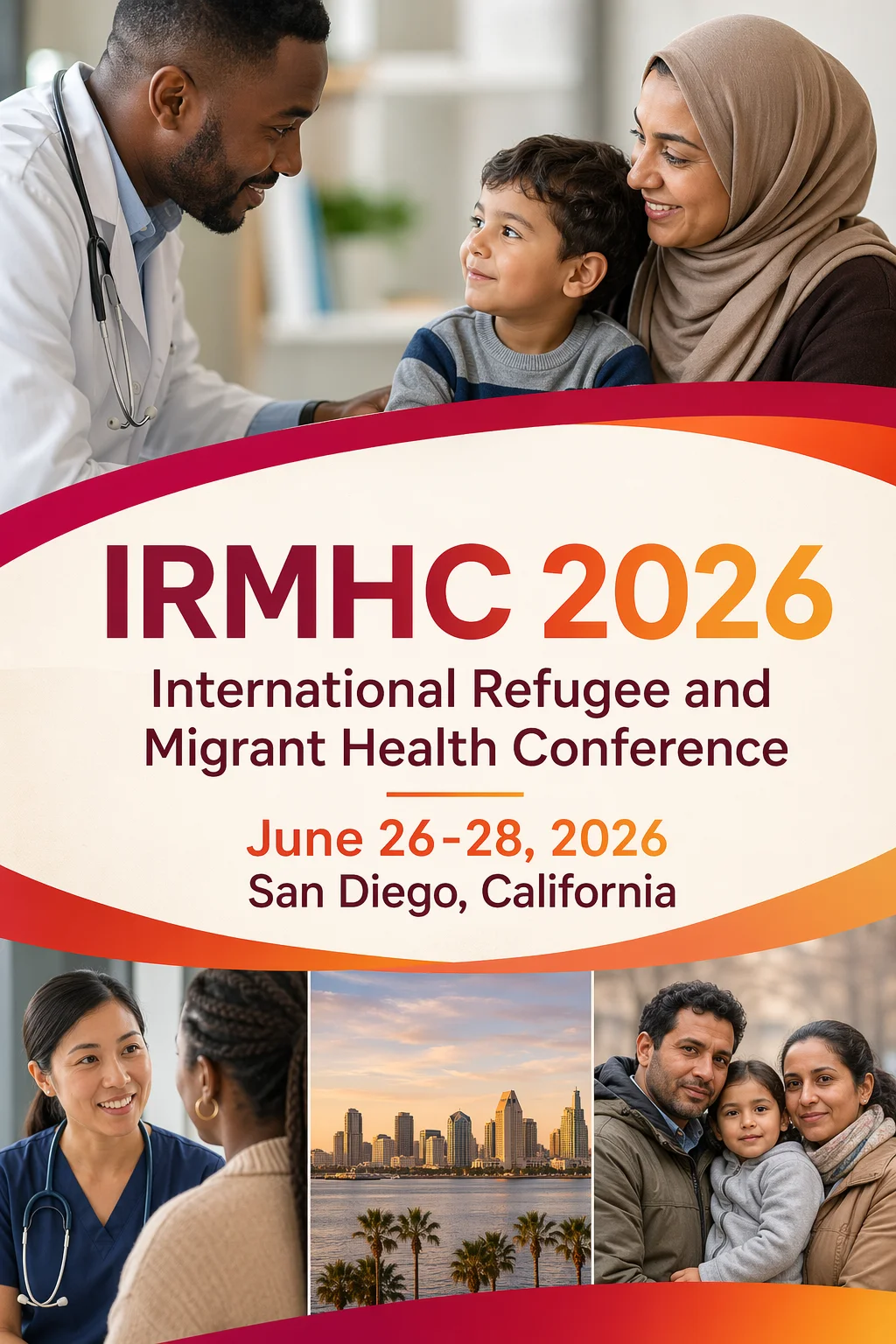
International Refugee and Migrant Health Conference (IRMHC) 2026
ConferenceMH2C
Join 1,100+ refugee health professionals at IRMHC 2026 in San Diego. Dr. Coakley (Co-Chair) and Dr. Fabreau (Committee Member) are leading the programme.
A research, education, innovation, and policy platform based at the University of Calgary. We work with local, national, and global partners to improve health outcomes for all migrants, including refugees, asylum seekers, and displaced persons.
Join 1,100+ refugee health professionals at IRMHC 2026 in San Diego. Dr. Coakley (Co-Chair) and Dr. Fabreau (Committee Member) are leading the programme.
Our most recent publications, media features, and awards. Updated regularly.
Our latest peer-reviewed research. Check back here for the most recent addition to MH2C's growing body of work.
Read more →MediaMH2C in the news. Links to the latest coverage of our work, our team, and migrant health in Canada and globally.
View coverage →AwardRecognition of excellence in migrant health research, education, and advocacy. Updated with each new honour received.
See all awards →Help us improve by sharing your thoughts. Every piece of feedback shapes our resources.
Key topics that shape our work
Over 300 million people live outside their country of birth. Canada welcomes more than 400,000 permanent residents annually.
"Migration is the movement of people away from their usual place of residence to a new place of residence, either across an international border or within a State" (IOM).
As of 2024, the global number of international migrants has surpassed 300 million (UN) and more than 120 million people have been forcibly displaced due to conflict, persecution, violence, human rights violations, and events that disturb public order (UNHCR). Migrants include international migrants, refugees, asylum-seekers, internally displaced persons, environmental migrants, and undocumented migrants. Canada welcomes more than 400,000 permanent residents each year (IRCC) and has responded to humanitarian emergencies with the rapid resettlement of 44,620 Syrian refugees, more than 1,400 Yazidi survivors of Daesh, and 55,195 Afghan refugees (IRCC).
Climate change drives displacement and aggravates the living conditions of displaced persons worldwide.
Many displaced people live in climate-vulnerable regions, where climate events destroy health systems and further strain livelihoods. Extreme weather events drive displacement, while slow-onset events diminish resources, threaten livelihoods, and amplify conflict. Migration cannot be holistically addressed without a comprehensive understanding of climate change and its ever-growing risks.
Migration is a social determinant of health. Migrants face distinct and compounded health challenges.
Limited access to food, water, sanitation, and essential services make migrants vulnerable to communicable and non-communicable diseases. Upon arrival, migrants face barriers including language, health literacy, system navigation, inadequate coverage, limited finances, and discrimination among healthcare providers (WHO).
Whether you are a healthcare provider, researcher, community member, or advocate, there is a place for you at MH2C.
Reach out with questions, partnership inquiries, or media requests.
Learn moreFollow our work and engage with the migration health community.
Learn moreExplore openings for clinicians, researchers, students, and staff.
Learn moreSupport research, education, and policy work that protects migrant health.
Donate nowYour input helps shape what we build. Every piece of feedback is read and tracked.
Every submission gets a tracking number
Track progress on the community page
Anonymous unless you choose to share your name or email